
Why Your Organisational Structure Won’t Survive the AI Era — And What Replaces It
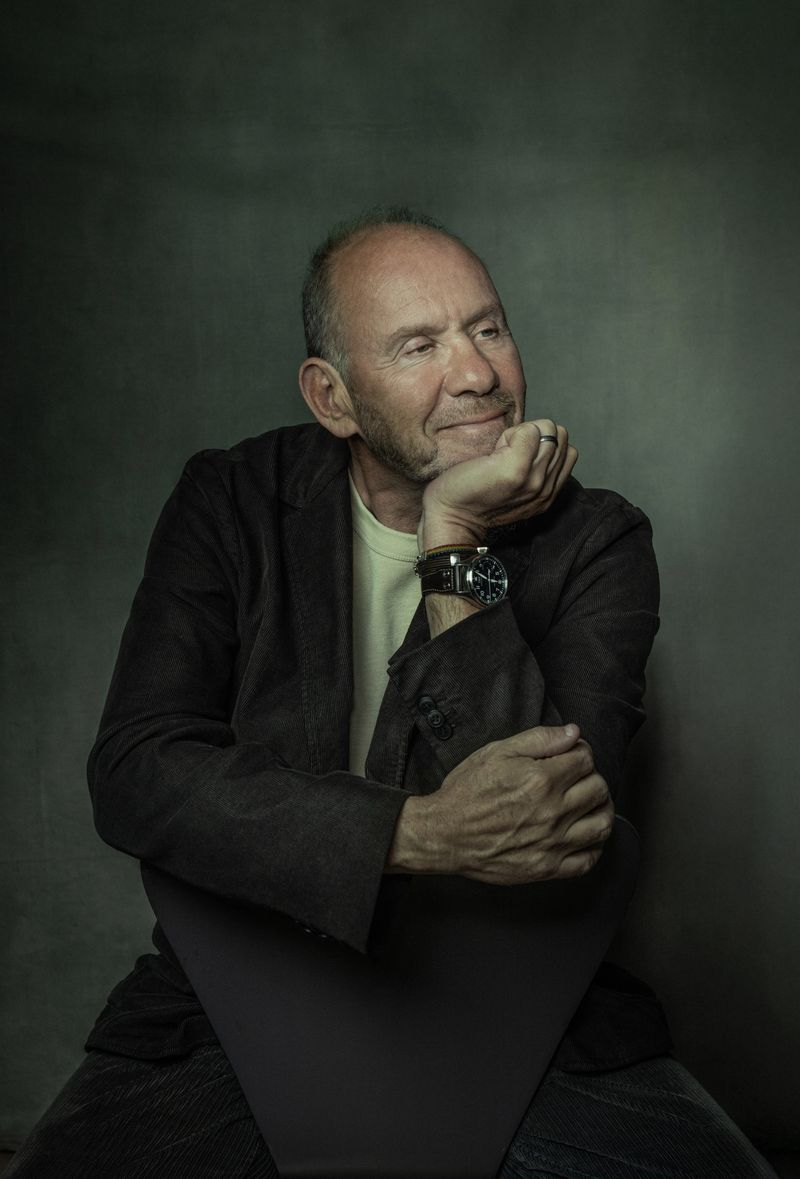
If you’re looking for an organisational design keynote speaker who does more than describe the problem — Ricardo Semler builds the alternative. And he’s been doing it for 45 years.
Not metaphorically. The top-down pyramid that still governs how most companies are structured — chains of command, fixed reporting lines, managers approving decisions — was codified at the École Polytechnique in Paris to coordinate military artillery. It was an elegant solution to a real problem: how do you get large numbers of people to act in concert when communication is slow and trust is scarce?
Two hundred years later, most organisations are still running on that blueprint. We’ve dressed it up with agile ceremonies, flattened a few layers, renamed our managers “leads” and our departments “squads.” But the underlying architecture — the pyramid — hasn’t changed…..and for most of the past century, that was fine.
It is no longer fine.
The Problem Isn’t Culture. It’s Architecture.
When organisations fail to adapt — when transformation programmes stall, when talent leaves, when AI initiatives produce expensive reports instead of real change, the instinct is to look at culture. Hire a Chief People Officer. Run an engagement survey. Launch a values refresh.
These are reasonable responses to the wrong problem.
The real issue is structural. A fixed hierarchy is an organisation designed for stability in a stable world. It assumes that decisions flow downward efficiently, that roles are relatively permanent, and that the people at the top have the most relevant information. None of those assumptions hold in 2026.
AI is redefining entire job functions on timescales faster than annual planning cycles can respond. The information advantage that used to sit at the top of organisations has been democratised — any employee with access to the right tools can now analyse, synthesise, and act on data that once required a team of analysts and months of work. And the pace of market change means that by the time a decision has travelled up the pyramid for approval and back down for execution, the context that made it relevant has already shifted.
This is not a cultural problem. It’s an engineering problem and it requires an engineering solution.
What 45 Years of Evidence Looks Like
Ricardo Semler took over his father’s manufacturing company in Brazil in 1980. He was 24. Within a few years, he had dismantled the org chart entirely. No fixed job titles. Workers set their own hours. In the most advanced iterations, teams set their own pay. Managers were rated by their direct reports and could be voted out.
The company grew from $4 million in revenue to over $160 million. Staff turnover dropped to 2% in an industry where 40% was the norm. Profit grew at 14% per year, every year, for 25 years. The Harvard Business Review wrote about it. 172 universities made it a case study. Four million people have watched Semler’s TED Talk.
The instinct, when people hear this story, is to treat it as an inspiring exception. A charismatic founder doing something unusual in Brazil in the 1980s. Interesting, but not applicable here.
That instinct is wrong — and Semler has spent the intervening decades proving it. A European retail bank removed 90% of its management layer and ran smoother. An Indian facilities company transitioned entirely to blue-collar self-management. A South African engineering firm built its culture collaboratively with its own employees rather than having it handed down from the top.
These aren’t experiments. They’re operating businesses generating real returns.
The Round Pyramid: An Organisational Architecture for Permanent Volatility
Semler’s new framework, developed through his global consultancy Semco3 — now operating across 40 countries — goes beyond how people behave inside organisations. It addresses the structure itself.
In The End of the Boss he introduces the Round Pyramid: a fluid, cellular organisational structure built not for stability, but for a world where volatility is the operating system.
The principle is straightforward: instead of a fixed hierarchy where roles are permanent and authority flows downward, organisations are built as networks of self-managing cells — typically around ten people — each led by someone validated by their peers, each united by a shared mission that is actively owned and periodically renewed. In the most advanced implementations, even the CEO role rotates.
This isn’t a utopian ideal. It’s a pragmatic response to a specific problem: how do you build an organisation that can reconfigure itself continuously, at the speed that modern markets and modern technology demand?
The answer isn’t to make your hierarchy more agile. It’s to replace the hierarchy with something architecturally different — something built not for stability, but for flux.
Where AI Fits In
The arrival of powerful AI doesn’t make this approach less relevant. It makes it urgent.
AI can now do something that previously required years of management experience and institutional knowledge: match people to problems. The conventional argument for hierarchy — that it takes time to understand who is good at what, and that managers accumulate that knowledge over years — is weakening. AI-assisted systems can surface relevant expertise, identify skills gaps, and flag mismatches between people and roles far faster than any traditional performance management process.
What AI cannot do is replace the judgment, creativity, and commitment that comes from people who genuinely own their work. A self-managing cell, where accountability is peer-driven and mission is shared, generates that ownership by design. A traditional hierarchy, where accountability flows upward and mission is handed down, tends to generate compliance instead.
Compliance is not a competitive advantage in 2026.
The Three Questions Worth Asking
If you are a CEO, a CHRO, or a board member thinking about organisational design right now, three questions are worth sitting with:
How long does it take your organisation to make and execute a significant structural decision? If the answer is measured in quarters rather than weeks, your architecture is already a liability.
Where does the most relevant information in your organisation actually sit? If it’s with frontline teams rather than senior leaders — and in most knowledge-intensive businesses, it is — your decision-making structure is inverted.
What percentage of your transformation investment is spent on changing behaviour inside a fixed structure, versus reconsidering the structure itself? If the answer is close to 100%, you are solving the wrong problem.
These aren’t rhetorical questions. They’re the starting point for a different kind of conversation about how organisations are built — one that Ricardo Semler has been having for 45 years, and that the rest of the business world is only now catching up to.
Ricardo Semler is the author of Maverick and The Seven-Day Weekend, founder of the Bonfire Initiative, and the driving force behind Semco3, a global organisational transformation consultancy operating across 40 countries. He speaks to senior leadership audiences on the future of organisational design, the end of traditional management, and building institutions that thrive in permanent volatility. For a copy of his book download it here at https://endoftheboss.org/download/
To enquire about Ricardo’s availability for keynote speaking, contact rachel@orationspeakers.com